Turn Video From Cost Center Into Growth Engine
Marketing leaders feel the squeeze. Budgets need to work harder, and video is often the biggest line item on the content plan. If you are running brand campaigns, product launches, and always-on content, you cannot afford to guess at video ROI. You need to show what is working, what is waste, and where to double down.
One big decision drives that outcome: do you rely on a stream of one-off video vendors, or partner with an embedded commercial video production crew that knows your brand like your own team does? The difference is not just style or personality. It shows up in hard numbers like cost per asset, cycle time, revision rate, brand compliance, and performance lift. When you measure these clearly, video stops feeling like a black box and starts acting like a growth engine.
Why Embedded Crews Outperform One-Off Vendors
An embedded crew is a strategic partner, not a one-and-done hire. You are not just booking a person with a camera. You are getting a coordinated squad that lives inside your brand world over multiple campaigns.
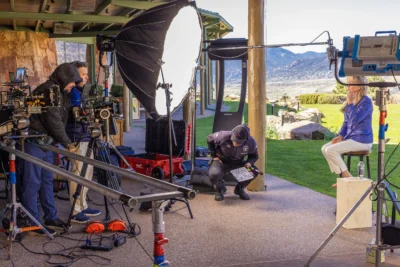
A strong commercial video production crew includes roles like:
- Director and producer
- Director of photography and camera team
- Audio specialist
- Editor and colorist
- Motion designer and finishing support
With one-off vendors, every project starts from zero. You spend time explaining your brand story, guardrails, what legal will say no to, where the landmines are with claims or visuals, how your approval ladder works. Then, right when they start to understand it, the project ends and that knowledge walks out the door.
With an embedded crew, that context sticks. We build long-term memory about:
- Your brand guidelines and messaging pillars
- Your preferred talent and locations
- Your review platforms and approval workflows
- Your internal pressures and seasonal priorities
That shared understanding turns into faster choices on set, stronger creative options, and less friction during post. Over time, it creates a reliable, repeatable system for content across seasonal pushes and evergreen assets.
Cost Per Asset and Cycle Time You Can Actually Forecast
Cost per asset sounds like a finance term, but it is simple. It is what you spend for each finished video that is approved and ready for use. Cycle time is how long it takes from the moment you brief the team to the moment you can launch the video.
On paper, a one-off vendor can look cheaper. But hidden costs add up:
- Repeated onboarding and brand education
- Extra meetings to clarify expectations
- More rework when creative misses the mark
- Rush fees when timelines slip and deadlines loom
Those costs do not always show on an invoice, but they pull time away from your team and can delay campaigns. Missed timing for a seasonal offer or launch window can hurt performance more than any line item
With an embedded commercial video production crew, cost per asset tends to drop over time because we can:
- Reuse lighting setups, scenes, and locations across shoots
- Build templates for intros, lower thirds, and end cards
- Share graphic, music, and motion packages across teams
- Streamline approvals because your stakeholders know our work
Oh, and we own our own gear and retain the footage indefinitely, making “rush edits” feel less rushed.
Cycle time shrinks because we already know your tools, your people, and your decision-makers. When your team sends a brief, we can move almost immediately into treatment and production planning instead of asking basic brand questions. This is especially helpful when you need quick turnarounds for seasonal pushes or last-minute promos.
Revision Rate and Brand Compliance as Quality Signals
Revision rate is simply how many edit rounds it takes to reach final approval. It is one of the clearest signals of quality and fit. Every extra round of edits eats into budget, creative energy, and your team’s calendar.
High revision rates often show that:
- The vendor did not fully get the brand
- The brief was not translated into the right story
- Stakeholders saw surprises instead of familiar patterns
Brand compliance is the other quiet signal. It is how well each video follows your:
- Visual identity: color, typography, framing, logo use
- Voice and tone: what you say and how you say it
- Legal and regulatory rules
- Accessibility expectations, such as captions and readable text
When every vendor has their own look and process, staying on brand can feel like chasing loose papers in the wind. With an embedded, in-house style crew, we create a living toolkit tailored to you:
- Shot libraries of approved angles, setups, and product treatments
- Color presets and LUTs that lock in your visual style
- Motion packages and graphic systems that match your brand
- Clear guidelines so our crew and your team speak the same language
This structure slashes revision rounds, improves first-cut approval rates, and keeps your brand protected, even when you are pushing out a lot of assets at once.
Our goal is to never send a video or asset that we believe isn’t ready. By the time we deliver a video, campaign or asset, revisions should look like: changing text placement, fine-tuning color, removing a b-roll shot you didn’t like. Revisions at this stage should never look like: starting from scratch.
From Views to Value: Measuring Performance Lift
Views and likes feel good, but they do not tell the full story. To judge ROI, you want to look at metrics tied closer to revenue and pipeline, such as:
- Click-through rate on video-driven ads or emails
- Conversion rate on landing pages that use video
- Cost per acquisition for campaigns that lean on video
- Time on page and scroll depth when video is on-site
- Assisted conversions where video plays a support role
When your creative comes from a single embedded crew, you get a much cleaner test bed. You can change one variable at a time, such as offer, headline, or format, while keeping the brand look and feel steady. That makes your A/B tests more honest and your year-over-year comparisons more useful.
As you shift from a patchwork of one-off vendors to an embedded model, you can track performance lift by comparing:
- Engagement on new product launch videos vs. old ones
- Conversion rates on pages before and after adding consistent explainer videos
- Retention and completion rates on onboarding or training series
Over several campaigns, you build a body of proof about what style, pacing, and story choices work best for your audience.
Build a Simple Scorecard to Compare Vendors vs. Crews
To make a clear decision, it helps to see everything in one place. A simple scorecard keeps the comparison honest. Create a table with columns for:
- Cost per asset
- Cycle time
- Revision rate
- Brand compliance score
- Performance lift
- Stakeholder satisfaction
For brand compliance and satisfaction, you can rate on a simple scale, for example 1 to 5, based on feedback from marketing, sales, and leadership. Populate the scorecard as you complete one or two campaign cycles. Track your current one-off vendors and then track a pilot run with an embedded commercial video production crew.
To align the scorecard with your priorities, add weights. For example:
- If speed to market is key, give extra weight to cycle time and revision rate
- If you are in a brand refresh, give more weight to compliance and consistency
- If you are focused on revenue-generating campaigns, lean into performance lift
Over time, this scorecard becomes your single source of truth for how video is performing as a system, not just as individual projects.
Turn Embedded Video Into Your Competitive Advantage
When you treat video as a repeatable system instead of a series of one-off projects, you get more than pretty pictures. You get clarity. You see how cost per asset, cycle time, revision rate, brand compliance, and performance lift work together to support your goals.
At Colorado Arts Productions, here in Colorado, our team is built as a full-service, brand-driven commercial video production crew. We handle directing, production, and post-production with an in-house group that takes time to learn your story before we roll camera. That shared context lets us plug into your marketing rhythm, protect your brand, and help turn your video line item into something you can measure, refine, and scale with confidence.
Get Started With Your Project Today
If you are ready to turn your concept into a compelling visual story, our commercial video production crew is here to help. At Colorado Arts Productions, we collaborate closely with your team to plan, shoot, and deliver content that supports your business goals. Tell us about your timeline, budget, and objectives, and we will outline a clear production plan. Have questions or need a custom quote? Just contact us to get the conversation started.