How a Planned Shoot Day Protects Your Brand and Budget
A commercial shoot day is not a solo sprint; it is a relay race. Every crew member carries your brand story for a short stretch, then passes it cleanly to the next person. When that handoff is sloppy, you feel it in your budget, your schedule, and your final video.
Here, we want to walk through how a well-planned commercial shoot actually works, from the first discovery call to the final export. We will map out what happens in pre-production, on shoot day, and in post, and show how a professional commercial video production crew hands off tasks with clear timelines, deliverables, and decision points that protect your ROI.
At Colorado Arts Productions, we work as a full-time, in-house team. Creative, production, and post all get deep into your brand before any camera comes out of the bag. That shared understanding keeps misalignment low, keeps reshoots rare, and keeps your content consistent across campaigns.
You can use this workflow as a template to plan your own projects, especially if you are gearing up for busy spring and summer campaigns when timelines tend to get tight and decisions come fast.
Brand Discovery and Pre-Pro: Where the Story Gets Built
Pre-production is where your story is actually made. The shoot is where it is captured.
About two to three weeks before the shoot, we focus on brand immersion and discovery. Typical steps include:
- Alignment meetings
- Review of past videos, design assets, and campaigns
- Audience and buyer persona review
- Location scouts
Because our creative, production, and post teams are all in-house, everyone joins this stage. That means your director, producer, and editor all hear the same brand language, tone cues, and non-negotiables from the start. Early decision points here include:
- Primary objective, awareness, conversion, internal communications, or fundraising
- KPIs and success metrics
- Must-follow brand guidelines, such as logo use, color, and voice
Around 10 to 14 days before the shoot, we move into concept and scripting. Creative leads shape concepts, treatments, and scripts, then cycle those through structured feedback rounds with clear dates. Typical pre-pro deliverables are:
- A creative brief that ties concept to goals
- Script or interview questions
- A preliminary shot list or outline
Key decisions to lock in this window:
- Narrative structure, for example, story arc, voiceover vs interview
- Messaging hierarchy, what must be said and what is optional
- Talent approach, employees, leadership, customers, or professional actors
Roughly 7 to 10 days before cameras roll, production planning kicks into high gear. The line producer and production manager:
- Finalize budgets and call sheets
- Book crew positions and confirm availability
- Lock locations, permits, and insurance
- Approve gear lists and lighting plans
- Review risk and backup plans for weather or access
The commercial video production crew also pre-visualizes coverage. The director, director of photography, and editor work together so the shot list gives post everything it needs. Client approvals at this stage usually include:
- Locations and sets
- Wardrobe and props
- Final schedule and call times
Delays here often ripple into overtime, rebooking fees, and rushed creative, so this is a phase you want to protect.
Shoot Day: How a Professional Crew Moves in Sync
On shoot day, a professional set looks calm, not chaotic, because the hard thinking already happened in pre-pro.
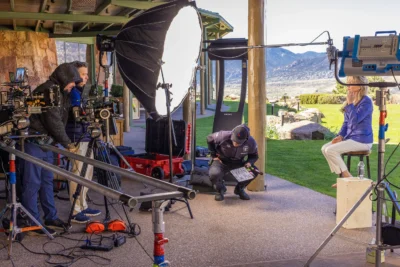
From call time to first shot, crew members arrive in waves. Production sets base camp, checks paperwork, and walks the day. Camera, grip and electric, and sound build their setups. Art and wardrobe dress the space so it already feels on brand before talent steps in. The director and producer compare the physical set to the approved brief, checking:
- Brand colors and logos in frame
- Diversity and representation in casting and background
- Framing that matches the planned look and feel
This is also when we confirm any last-minute script trims, reorder shots for weather or scheduling conflicts, and agree on any small creative changes in real time with you.
From first shot to lunch, the focus is on rolling with intent. The director and 1st assistant director manage pace and performance, while the director of photography and camera team handle image quality. The script supervisor and producer track:
- Coverage against the shot list
- Line reads and key talking points
- Continuity between takes and angles
Clients or marketing leads often watch a calibrated monitor. The producer acts as translator, turning comments into clear tweaks so the crew stays on track. To protect post, we care a lot about:
- Proper slating and organized takes
- Clean audio with backups
- Safety takes for every key line
- Extra b-roll for flexibility later
From lunch to wrap, we focus on pickups, alternates, and future-proofing. We make time for:
- Extra CTAs, with different phrasing
- Vertical and square framing for social
- Seasonal or evergreen variations where useful
Meanwhile, data management is in full swing. Media is backed up to multiple drives, checked, and labeled. Notes and scene logs become the roadmap for the edit. Before we leave, the producer gives a quick summary of what we captured, anything we missed but can solve in post, and what you will see in the next few days.
From Set to Suite: Handoff Into Post-Production
The handoff from set to post is where a lot of projects get lost. A good crew plans this like another shoot day.
In the first days after the shoot, a DIT or assistant editor ingests and organizes all footage. They:
- Build a consistent folder structure
- Sync audio and video
- Label clips by scene, take, and priority
Because our editors have already been through brand discovery, they know what style and tone to look for. Early deliverables often include:
- Interview transcripts
- Low resolution string-outs of interviews or scenes
- A basic assembly cut for internal review
From days three to fourteen, editorial, sound, and color begin working, often in parallel. The editor, creative director, and producer review:
- Pacing and story clarity
- On-screen text and lower thirds
- Placement and strength of the CTA
Once the picture is close, sound design and color grading step in, working from locked or near-locked cuts. Decision checkpoints here include:
- Final cut length matched to media buys
- Approved music tracks or custom score
- Graphics and animation that stay true to brand guidelines
Around days seven to twenty-one, planned feedback rounds keep things moving. To avoid scope creep, we align early on:
- Number of review rounds
- Who comments on each round
- Deadlines for feedback
Typical deliverables by stage:
- First review cut, focused on structure
- Near-final cut, with color and sound close
- Final master, plus exports for each channel like 16:9, 1:1, and 9:16, or local language variants when needed
Throughout, we use annotated links, and a single point of contact so you always know who owns the next decision.
Timelines, Budgets, and Decision Points You Should Own
For a standard brand or commercial spot with a professional commercial video production crew, a realistic end-to-end calendar is often in the range of four to eight weeks from discovery to final delivery. Tight rush timelines are possible, but they put pressure on creative quality and approvals.
The decisions you own that protect your schedule and budget most are:
- Goals and audience
- Budget ceiling and must-hit launch dates
- Approval structure and who has final say
- Early locks on script, talent, and locations
Another big choice is who you hire. A full crew is different from one person with a camera. With a crew, you get:
- Specialized roles across creative, production, and post
- Redundancy if someone is sick or unavailable
- Continuity and shared brand memory across projects
Because we work as an in-house team at Colorado Arts Productions, we keep that brand knowledge from campaign to campaign. That makes each new project faster to spin up and more consistent visually, whether you are planning spring product content, summer events, or year-round brand stories.
After launch, we always recommend a post-campaign review that covers performance, creative that over-delivered, and what to adjust next time. That feedback folds right back into the next discovery phase, so every shoot builds on the last.
Turn Today’s Shoot Into a Long-Term Brand Asset
When you look at a commercial shoot as a simple one-day event, you miss where the real value is. The power is in the handoffs, from brand discovery to pre-pro, from pre-pro to set, from set to the edit suite, all carried by one aligned crew that knows your brand.
If you map your own process against this workflow, you will quickly see where decisions are rushed, where roles feel fuzzy, and where a more integrated team could give you smoother shoots and stronger, more consistent content.
Get Started With Your Project Today
If you are ready to produce a commercial that looks polished and professional, our commercial video production crew is here to help you plan the next step. At Colorado Arts Productions, we work with you to clarify your goals, script your message, and coordinate every detail of the shoot. Tell us about your timeline and budget so we can recommend a tailored approach that fits your brand. Have questions or want to book a consult right away? Simply contact us to start the conversation.